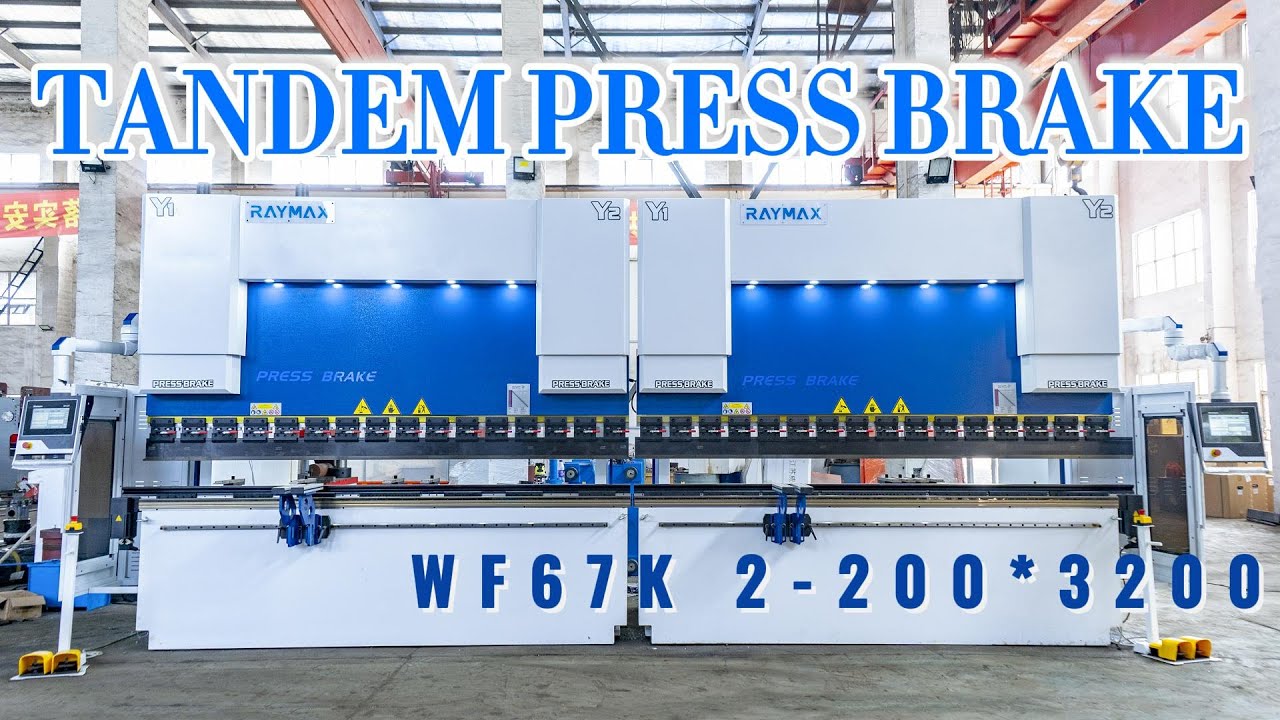
In sheet metal work, not all parts can be handled by a single machine. Some components are too long, too heavy, or require force beyond the capacity of standard press brakes. Here, tandem press brakes are applied. Multiple units are linked to handle larger components, ensuring control over accuracy and alignment. To know more about tandem press brakes, click here.
What Tandem Operation Means
Tandem press brakes are two machines interconnected to form a single system. They move together; that is, the two machines move simultaneously and in the same force pattern. This coordination enables them to stretch long pieces of sheet evenly. Without this setup, a single machine would struggle to maintain consistent pressure across the entire length.
Why Large Bending Is Needed
Massive bending is prevalent in the construction, transport and energy industries. These areas use long panels, structural beams and wide-ranging enclosures. It is usually more efficient to produce such parts in one piece than to have smaller parts attached to each other. It improves strength and reduces assembly work. Tandem systems enable the controlled processing of such large components.
Synchronization of Machines
The key to tandem operation is synchronization. Both machines must move together without delay. If one machine lags behind, the bend can become uneven. Control systems are used to maintain alignment of motion. These systems ensure that the ram position, speed, and pressure remain consistent across both units.
Maintaining Bend Accuracy
Maintaining accuracy becomes harder as the workpiece length increases. Small variations can lead to visible errors along the bend line. Tandem press brakes address this by evenly distributing force. With proper setup, the machines apply consistent pressure from one end of the sheet to the other. This helps achieve uniform angles along the full length.
Machine Frame Stability
When dealing with large parts, the forces involved are higher. The machine frame must handle this load without shifting. Strong frames reduce vibration and maintain alignment during operation. Stability is important not only for accuracy but also for the long-term condition of the equipment.
Tooling Considerations
Tooling plays a major role in tandem bending. The punches and dies must match across both machines. Any mismatch can affect the final result. Tooling must also be carefully aligned to ensure the bend line remains straight. A consistent tooling setup helps maintain quality across large workpieces.
Handling Long Workpieces
Large sheets are harder to handle than smaller ones, needing support before, during, and after bending. Without support, they sag, causing uneven bends. Support systems or additional handling equipment are often used to keep the sheet stable throughout the process.
Control Systems in Tandem Setup
Control systems manage how the machines operate together. Operators input the required bend parameters, and the system coordinates both units. This minimizes manual adjustments and helps ensure consistent output. Modern systems also enable the operator to monitor performance and correct it as needed.
Repetition of Large Parts
Repeatability is valuable even when dealing with large parts. Multi-sized pieces of similar sizes are often involved in production. Tandem press brakes have storage space, allowing all parts to be made with the same parameters. This minimizes variation and ensures that all parts fit together when assembled.
Integration with Production Flow
Tandem systems may be part of a larger production process. Post-bending components may be transferred to welding, assembly, or finishing processes. A strong sense of connection with other machines helps ensure workflow efficiency. Correction is necessary to ensure that large pieces are processed without delay.
Safety and Operation
When operating heavy machinery and handling large materials, one must not neglect safety. The operators are expected to handle both the machine and the workpiece. Safety systems can be used to reduce risks during operation. Another factor to consider in working with tandem setups is the presence of clear procedures and proper training.
Maintenance and Alignment
Tandem systems require regular maintenance to ensure they function correctly. Alignment checks ensure that both machines stay in sync. As time goes on, wear will take its toll on performance, whereby components will be inspected and adjusted when necessary. Regular maintenance can prevent mistakes in massive bending operations.
Conclusion
Tandem press brakes are used when individual machines cannot bend large pieces of metal or lack the strength to do so. When manufacturers combine two machines into a single system, they will be able to process large parts and control the accuracy and consistency. The effectiveness of the given arrangement relies on coordination, stable organization, and adequate management of materials. Tandem press brakes have a significant role in ensuring that production in industries with large components is not only efficient but also reliable.